
Homeowners who are planning a basement guest suite remodel in Georgia can feel good about what often comes down to one big question: how do you make a below-grade space comfortable, durable, and guest-ready without creating moisture problems later? This case study is for homeowners who want a private, hotel-like guest area—plus the peace of mind that the build decisions were made with humidity and real basement conditions in mind. In Athens, GA, we frequently see basements that look “dry enough” at first glance, but comfort issues show up after the space is finished if the plan doesn’t account for air movement, materials, and water management. Spring is a natural time to evaluate basements, since changing temperatures can reveal musty odors and condensation patterns that were easy to miss in cooler months.
The Essentials for a Guest-Ready Basement
- Start with moisture strategy, not finishes. Flooring, drywall choices, and insulation should follow a plan for managing humidity and bulk water.
- Design for comfort like a real bedroom. Think temperature stability, sound control, lighting layers, and storage—not just “extra space.”
- Separate “water control” from “air control.” Keeping water out and keeping indoor air dry are related, but they’re not the same task.
- Use basement-appropriate assemblies. Below-grade walls and slabs need materials and detailing that tolerate seasonal moisture swings.
- Plan guest flow. A suite feels intentional when the entry, bath access, and privacy lines are designed early.
How This Basement Guest Suite Plan Came Together
Background/context: The homeowner wanted an unfinished basement to become a comfortable guest suite with a sleeping area, a small lounge zone, and a bathroom. The space had typical unfinished-basement characteristics: exposed concrete, visible mechanicals, and limited natural light. The goal wasn’t just to “finish it,” but to create a space guests would genuinely enjoy using.
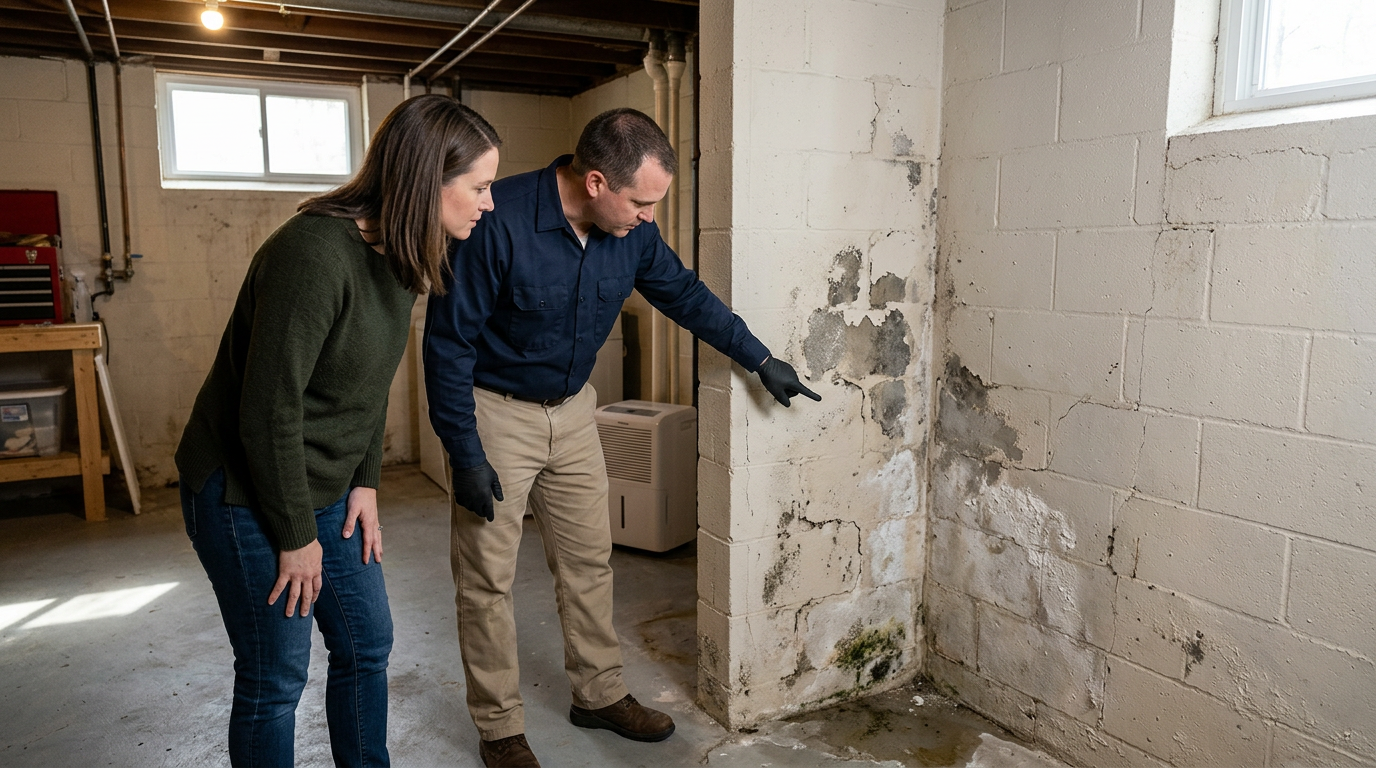
The challenge/situation: The basement didn’t have obvious standing water, but the homeowner reported occasional musty odor and a “clammy” feel during humid stretches. That combination is a common warning sign that the space needs a deliberate approach to moisture, ventilation, and material selection before adding insulation and finishes.
The approach taken: We treated the project like a comfort-and-durability build, not a cosmetic upgrade. The plan focused on (1) identifying likely moisture pathways, (2) choosing assemblies that reduce risk of trapped moisture, and (3) building a guest-suite layout that feels private and bright even with limited windows.
Results/outcomes: The finished suite delivered a cleaner indoor feel, quieter separation from the main floor, and a more “complete home” experience for visitors. Just as importantly, the design choices prioritized materials and detailing intended to perform well in humid conditions over time.
Lessons learned: When basements are finished without a moisture-and-air plan, comfort complaints (odor, sticky air, cold floors) can show up after the drywall is up. When the plan leads with building science basics and guest comfort, the space tends to feel intentionally designed rather than “leftover square footage.”
Why Humidity-First Decisions Protect Your Budget and Timeline
Basement guest suites can be high-value spaces, but they’re also less forgiving than main-level rooms. If humidity and moisture management aren’t addressed early, the impacts can show up as:
- Rework costs: Finishes may need removal if materials trap moisture or odors persist.
- Schedule delays: Moisture-related discoveries can pause progress while conditions are evaluated and corrected.
- Comfort issues for guests: A room can look beautiful and still feel damp, cold underfoot, or stale.
- Material performance problems: Some products that do fine upstairs may not be ideal below grade, especially where seasonal humidity swings occur.
Common Basement Guest Suite Missteps
- ☐ Finishing before confirming moisture conditions. A basement that “seems fine” can still have seasonal humidity patterns that affect comfort and materials.
- ☐ Treating dehumidification as optional. Many guest-ready basements need a consistent plan for indoor humidity control to stay comfortable.
- ☐ Using the wrong wall or floor assembly. Below-grade surfaces behave differently than framed walls and subfloors on upper levels.
- ☐ Under-planning lighting. Basements often need layered lighting (ambient + task + accent) to avoid a dim, cave-like feel.
- ☐ Forgetting sound and privacy. Guests sleep better when noise transfer and sightlines are addressed in layout and door placement.
- ☐ Designing the suite around leftover space. The best results come from planning circulation, furniture zones, and bathroom access intentionally.
A Smart Prep Plan Before You Finish a Basement Suite
- ☐ Ask for a moisture-focused assessment. Confirm whether the space shows signs of bulk water entry, vapor movement, or humidity buildup.
- ☐ Define “guest suite” expectations. Decide early: sleeping capacity, storage needs, workspace, lounge seating, and bath access.
- ☐ Choose basement-appropriate materials. Select flooring, trim, and wall assemblies intended for below-grade conditions and easier long-term maintenance.
- ☐ Plan mechanicals and access. Coordinate HVAC, dehumidification strategy, and service access so the suite doesn’t compromise future maintenance.
- ☐ Design lighting and egress considerations early. A bright, comfortable suite depends on the right fixture layout and code-compliant planning.
- ☐ Document the scope clearly. Align on what’s included (bath features, built-ins, sound control, finishes) to reduce change orders later.
Professional Insight: What Makes Basement Suites Feel “Dry” and Comfortable
In practice, we often see that the most comfortable basement guest suites aren’t the ones with the fanciest finishes—they’re the ones where air movement, humidity control, and basement-appropriate materials were decided before the design details. When those fundamentals are handled early, the space tends to smell cleaner, feel warmer underfoot, and stay more consistent across seasons.
When It’s Time to Bring in a General Contractor
A basement guest suite is a multi-trade project (framing, electrical, plumbing, HVAC, insulation, finishes). It’s worth getting professional support when:
- You notice musty odors, visible staining, or recurring dampness. Those signs should be evaluated before finishes go in.
- The project includes a bathroom or wet bar. Plumbing and ventilation coordination can affect both performance and inspection outcomes.
- You want a “real bedroom” feel. Layout, sound control, lighting, and egress planning are easier to get right with a coordinated build plan.
- The basement has low ceilings or complex mechanical runs. Soffits, duct routing, and access panels should be planned to avoid a chopped-up look.
- You want one point of accountability. A GC-led approach helps align scope, sequencing, and finish quality across trades.
Common Questions About Finishing a Basement Guest Suite
What makes a basement space feel comfortable for overnight guests?
Comfort usually comes from consistent temperature, controlled humidity, good lighting, and privacy. A well-planned layout and the right material choices can make the space feel like part of the home rather than an afterthought.
Do all finished basements need a dehumidifier?
Not every basement requires the same solution, but many benefit from a clear humidity-control plan. The right approach depends on how the home is conditioned, how the basement is used, and what moisture conditions are present.
Is it risky to add a bathroom in a basement?
It can be a straightforward addition when it’s designed and built with proper plumbing, ventilation, and access for maintenance. The key is coordinating the trades and confirming the scope supports the existing systems.
What should be decided before choosing finishes and paint colors?
Confirm the moisture strategy, insulation approach, mechanical plan, and lighting layout first. Those decisions influence which finishes are appropriate and how well they’ll perform over time.
How long does a basement guest suite project usually take?
Timelines vary based on scope (bathroom, custom built-ins, mechanical changes), permitting/inspections, and material availability. A contractor can provide a schedule once the design and selections are defined.
Where to Go from Here
A guest suite in the basement can be one of the most practical upgrades you make—when it’s planned around moisture realities and comfort, not just square footage. This case study highlights a simple theme: start with a humidity-aware strategy, then build the layout and finishes on top of it. If you’re considering a basement guest suite remodel in Georgia, homeowners can use year-round, a scoped plan and the right assemblies can help the space feel clean, bright, and welcoming. The next step is clarifying your goals and having a professional review the basement conditions before construction begins.
Contact Tipton's Fine-Tuned Carpentry to Get Your Quote
Find out how Tipton's Fine-Tuned Carpentry can help with a no-obligation quote.
Contact Us